

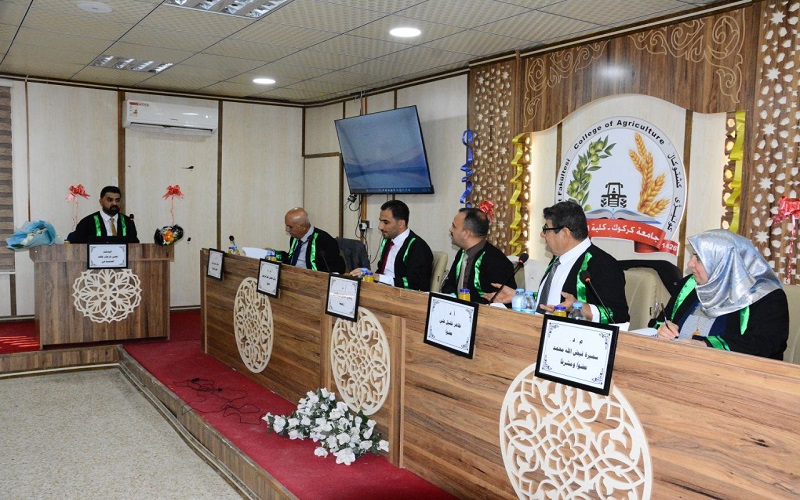
A master’s thesis at the College of Agriculture examined the assessment of pollution and the suitability of groundwater for various purposes in Tuz Khurmatu District, Salahuddin Province.
The study, presented by student Qusay Farhan Khalaf, aimed to evaluate the extent of pollution and suitability of wells in the study area for irrigation, human consumption, and animal drinking, as well as to determine the level of contamination of these wells with some heavy elements such as lead and cadmium.
The study concluded that groundwater in the study area varied in its suitability for different uses due to differences in its chemical and physical characteristics. A clear variation in salinity levels was observed in most regions, attributed to differences in geological formations on one hand, and increased groundwater exploitation on the other. Most of the studied well water properties showed high concentrations — such as electrical conductivity and total hardness — exceeding the permissible limits according to international standards.