 University of Kirkuk - College of Veterinary Medicine
  Arabic
  English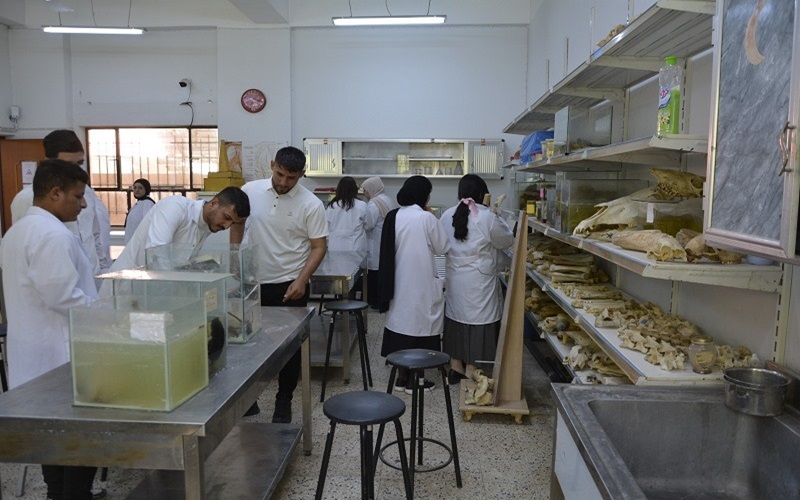
Surgery Laboratory
The Surgery Laboratory at the College of Veterinary Medicine is the practical and clinical unit dedicated to teaching and training students in anesthesia techniques and surgical procedures for animals.
Importance of the Surgery Laboratory
Practical Application: Connects theoretical knowledge with direct practical application.
Student Development: Empowers students with the confidence and skills to handle real cases.
Community Service: Receives and treats patients within the Veterinary Teaching Hospital.
Activities and Tasks within the Laboratory
Anesthesia Training: Practice calculating dosages and methods of administering anesthesia to different animals.
Surgical Skills: Practice suturing wounds, sterilization, and precise instrument use.
Veterinary Follow-up: Monitoring the animal's health before and after surgery.
Basic Instruments and Equipment
Operating Tables: Specially designed to accommodate various animal sizes.
Anesthesia Equipment: Gas infusion and vital signs monitoring devices.
Clamps and Scalpels: Sterile surgical instruments designed for opening and closing tissues.
Practical Application: Connects theoretical knowledge with direct practical application.
Student Training: Equips students with the confidence and skills to handle real cases.
Community Service: Receives and treats patients within the veterinary teaching hospital.
Activities and Tasks within the Laboratory
Anesthesia Training: Practice calculating dosages and methods of administering anesthesia to different animals.
Surgical Skills: Practice suturing wounds, sterilization, and precise instrument use.
Veterinary Follow-up: Monitoring the animal's health before and after surgery.
Essential Instruments and Equipment
Operating Tables: Specially designed to accommodate various animal sizes.
Anesthesia Equipment: Gas infusion and vital signs monitoring devices.
Clamps and Scalpels: Sterile surgical instruments designed for opening and closing tissues.