University of Kirkuk · College of Media
Department of Radio and Television
Explore the academic program, department administration, faculty, curriculum, admission requirements and graduate opportunities.
About the Department
A specialized academic setting for future radio and television media professionals.
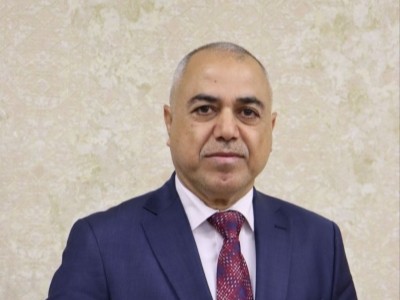
A Welcome Message from the Head of Department
“Welcome to the Department of Radio and Television.”
On behalf of the Department of Radio and Television, I welcome you to an academic institution dedicated to preparing outstanding media professionals with the vision to help build a more developed and informed society.
We believe that media is a mission before it is a profession. We therefore work to develop our students’ abilities and provide the knowledge and practical experience needed for leadership in their fields. We accompany them throughout their educational and creative journeys, confident that their imagination and innovation will make them ambassadors of truth, professional integrity and positive change.
We wish you an educational experience full of challenges, achievement and success.
Dr. Jawad Mohammed Amin
Head of the Department of Radio and Television
Department Overview
The Department of Radio and Television at the College of Media, University of Kirkuk, prepares a new generation of media professionals equipped with the creative and practical skills required for radio and television broadcasting. Its academic programs integrate theoretical knowledge and hands-on training supported by contemporary technologies.
Vision
“Creativity grounded in reality and a vision shaping the future of media.”
The department aspires to lead in preparing distinguished media professionals who can respond to modern communication challenges and promote freedom, professionalism and social responsibility.
Mission
“We report events, uncover the truth and create media that respects humanity.”
The department seeks to deliver academic content using effective teaching methods that develop scientific, creative and professional media skills. Its mission is to prepare highly competent radio and television practitioners through advanced education that combines theory with practical experience and upholds professional and ethical values.
Department Objectives
- Unleashing Creativity: Empower students to produce distinctive media content that combines originality with innovation.
- Technical Excellence: Train students in contemporary radio and television production and broadcasting techniques to prepare them for professional practice.
- Developing Media Leaders: Graduate media professionals with leadership potential, passion, talent, and a strong commitment to professional ethics.
- Research and Development: Promote scientific research and innovative approaches to current media challenges.
- Community Partnerships: Develop cooperation with media institutions and connect academic learning with professional practice.
- Media for Positive Change: Emphasize the role of media in fostering informed communities and conveying truthful information.
Department Administration and Committees
Structure, responsibilities and specialized committees supporting academic and administrative work.
Department Council
The department’s principal body for managing academic and administrative affairs.
Functions of the Department Council
- Recommend faculty and lecturer recruitment needs and invite visiting media professionals.
- Establish scientific, examination and educational committees as required.
- Implement resolutions referred by the University Council or College Council.
- Review curricula and course syllabi, monitor academic developments and guide faculty in updating study plans.
- Evaluate faculty performance and propose professional development plans for academic and administrative staff.
- Follow up on students’ academic and educational affairs at all study stages.
Responsibilities of the Head of Department
- Implement the University’s objectives, policies and College Council decisions relevant to the department.
- Oversee the departmental strategic plan and follow up on its administrative, academic, research and cultural implementation.
- Fulfil assigned teaching duties, monitor student attendance and oversee examinations.
- Develop relations within and outside the University and ensure the department’s teaching and research needs are addressed.
- Refer research papers to academic committees and nominate reviewers for faculty promotion procedures.
- Allocate courses to faculty, prepare class and examination timetables, and submit them to the Dean’s Office.
- Hold at least one meeting with students each semester to discuss their needs and concerns.
- Prepare faculty and staff performance evaluation reports for submission to the Dean.
- Oversee academic advising, student allocation and credit equivalency for transferred students.
- Chair the departmental scientific committee and issue necessary administrative orders following the Dean’s approval.
Responsibilities of the Department Secretary
- Act on behalf of the Head of Department within delegated powers and help organize departmental operations.
- Implement and follow up on decisions of the Department Council and department management.
- Assist in preparing semester and annual scientific reports and monitoring academic affairs across all study stages.
- Assist with teaching allocations, class and examination timetables, teaching loads and lecturer remuneration.
- Monitor compliance with University regulations, including dress requirements and permitted absences, and submit relevant recommendations.
Responsibilities of the Examination Committee
- Apply examination instructions issued by the Ministry, University, College Council and Central Examination Committee.
- Organize examination rooms and student allocation; accurately prepare lists of failures, absences, carry-over cases and deferrals.
- Receive coursework marks and examination questions, distribute and collect answer booklets, and check official stamps.
- Apply anonymous codes to answer-booklet covers and form specialist marking and checking committees.
- Record and verify grades, preserve secure electronic copies and submit results to the Dean for approval before publication.
- Receive student objections, consider them within a maximum of five days, and recommend legal procedures for misconduct cases.
Responsibilities of the Scientific Committee
- Consider faculty proposals to amend curricula, including additions and deletions, and approve course topics.
- Monitor the research and scientific activities of faculty and departmental personnel.
- Organize professional development courses and nominate staff for external courses, conferences and workshops.
- Review textbooks and propose updates reflecting scientific and media developments.
Faculty Members
Academic staff of the Department of Radio and Television (18 entries in the supplied Arabic list).
| No. | Full name | Academic title | General specialization | Master's specialization | PhD specialization | Administrative role |
|---|---|---|---|---|---|---|
| 1 | Jawad Mohammed Amin Issa Shinkaجواد محمد أمين عيسى شينكا | Assistant Professor (PhD) | Media | Radio and Television Journalism | Radio and Television Journalism | Head of Department |
| 2 | Humam Saleh Mustafa Sameen Al-Hamdaniهمام صالح مصطفى سمين الحمداني | Lecturer (PhD) | Journalism and Communication Sciences | Journalism and Communication Sciences | Not available | Department Secretary |
| 3 | Daham Ali Hussein Kulot Al-Obaidiدحام علي حسين كلوت العبيدي | Professor (PhD) | Media | Media | Philosophy in Radio and Television Journalism | None |
| 4 | Aram Mohammed Raheem Kaka Wais Zanganaأرام محمد رحيم كاكة ويس زنكنة | Professor (PhD) | Civil Engineering | Soil and Foundations | Soil and Foundations | Not available |
| 5 | Luay Najm Jirjis Aminلؤي نجم جرجيس أمين | Professor (PhD) | Arabic Calligraphy and Ornamentation | Fine Arts | Philosophy in Arabic Calligraphy and Ornamentation | Studio Supervisor; Student Activities Division Supervisor |
| 6 | Yousif Khurshid Saeedيوسف خورشيد سعيد | Assistant Professor (PhD) | Not available | Not available | Not available | Not available |
| 7 | Abdullah Abdul Majeed Hassan Ali Al-Jubouriعبد الله عبد المجيد حسن علي الجبوري | Assistant Professor (PhD) | Media / Radio and Television | Radio and Television | Radio and Television Journalism | Division Supervisor |
| 8 | Saif Al-Din Hussein Khalaf Husseinسيف الدين حسين خلف حسين | Lecturer (PhD) | Media | Radio and Television Journalism | Radio and Television Journalism | Division Supervisor |
| 9 | Qusay Hameed Fahad Mahmoudقصي حميد فهد محمود | Lecturer | Media | Media | Radio and Television | None |
| 10 | Dina Nizam Abdul Ghani Jaafarدينا نظام عبد الغني جعفر | Lecturer | Law | Public Law / Financial Law and Tax Legislation | None | Division Supervisor |
| 11 | Mohammed Hashim Badai Mutlabمحمد هاشم بداي مطيلب | Lecturer | Physical Education | Motor Learning | None | Director of Registration Division |
| 12 | Hamza Raheem Shihab Ahmedحمزة رحيم شهاب أحمد | Assistant Lecturer | Political Science | Strategy and Security Studies | None | Unit Supervisor |
| 13 | Laith Sattam Hamoud Hassanليث سطام حمود حسن | Assistant Lecturer | Software Engineering | Software Engineering | None | Computer Laboratory Supervisor |
| 14 | Duaa Najdat Mohammed Khalil Al-Zoubaieدعاء نجدت محمد خليل الزوبعي | Assistant Lecturer | Arabic Language | Arabic Language / Abbasid Literature | None | Division Supervisor |
| 15 | Ali Abdul Razzaqعلي عبد الرزاق | Assistant Lecturer | Not available | Not available | Not available | Not available |
| 16 | Ahmed Mohammed Husseinأحمد محمد حسين | Assistant Lecturer | Not available | Not available | Not available | Not available |
| 17 | Aliya Hassan Abdullahعليه حسن عبد الله | Assistant Lecturer | Not available | Not available | Not available | Not available |
| 18 | Haider Hassan Aziz Ahmed Al-Qaisiحيدر حسن عزيز أحمد القيسي | Assistant Lecturer | Law | Criminal Law | None | None |
English transliterations of names are provided to help international visitors. Official English spellings and current titles should be confirmed against the department’s personnel records before final publication.
Curriculum and Academic Units
Four academic stages in the undergraduate Radio and Television program.
Study System and Duration
Duration: Four academic years.
Study system: The Bologna Process currently applies to first-stage students. Current second-, third- and fourth-stage students continue under the approved annual system until the Bologna cohort advances to their respective stages.
Language of Instruction and Curriculum
Teaching language: Arabic in specialized courses, with English Language included in the approved study plan.
Study format: Integrated theoretical and practical instruction appropriate to radio and television production and professional media practice.
Assessment and Examinations
For current Stages 2, 3 and 4Annual coursework (40%): 20% for the first semester and 20% for the second, including tests, class activities and continuous assessment.
Final examination (60%): 40% theoretical and 20% practical/applied components.
This structure does not apply to first-stage students currently enrolled under the Bologna Process.
Bologna Process
Currently applied to Stage 1The Bologna Process is currently implemented for first-stage students and expands gradually as the enrolled cohort advances. It uses the approved system of credits, study hours and learning outcomes.
View Bologna ProcessThis link currently opens the official Arabic-language Bologna page. An English version can be linked here once published.
Bologna currently applies to this stage
The following 40-unit listing is retained from the Arabic department page; Bologna ECTS allocations are documented separately.
| No. | Course / Subject | Listed Units |
|---|---|---|
| 1 | Principles of Public Relations | 4 |
| 2 | Mass Communication and Its Media | 4 |
| 3 | Radio and Television News | 4 |
| 4 | Television Photography | 4 |
| 5 | Editing | 4 |
| 6 | Media Language | 4 |
| 7 | Human Rights and Democracy | 4 |
| 8 | English Language | 4 |
| 9 | Computer Studies | 4 |
| 10 | Digital Media Literacy | 4 |
| Total as listed in the Arabic source | 40 units |
Current annual system
| No. | Course / Subject | Listed Units |
|---|---|---|
| 1 | Radio and Television Directing and Production | 4 |
| 2 | Theories of Mass Communication | 4 |
| 3 | Digital Technologies and Computers | 4 |
| 4 | Political Communication | 4 |
| 5 | Radio Art (Program Preparation and Presentation) | 6 |
| 6 | Media Language | 4 |
| 7 | English Language | 4 |
| 8 | Media Research Methods | 4 |
| 9 | Voice and Delivery Techniques | 4 |
| 10 | Radio and Television Editing (Interviews and Investigations) | 4 |
| 11 | Crimes of the Baath Regime | 2 |
| Total as listed in the Arabic source | 44 units |
Current annual system
| No. | Course / Subject | Listed Units |
|---|---|---|
| 1 | Public Opinion | 4 |
| 2 | Investigative Journalism | 4 |
| 3 | Radio and Television Editing (Reports and News Correspondence) | 4 |
| 4 | New Media | 4 |
| 5 | Media Legislation and Ethics | 4 |
| 6 | Language of Media Discourse | 4 |
| 7 | Statistics | 4 |
| 8 | English Language | 4 |
| 9 | Information Technology | 4 |
| 10 | Radio and Television Networks | 4 |
| Total as listed in the Arabic source | 40 units |
Current annual system
| No. | Course / Subject | Listed Units |
|---|---|---|
| 1 | Propaganda and Psychological Warfare | 4 |
| 2 | Radio and Television Management and Planning | 4 |
| 3 | Radio and Television Advertising | 4 |
| 4 | Radio and Television Journalism | 4 |
| 5 | Radio and Television Technologies | 4 |
| 6 | Scriptwriting | 4 |
| 7 | Applied Language Skills | 4 |
| 8 | English Language | 4 |
| 9 | Graduation Project | 4 |
| Total as listed in the Arabic source | 36 units |
Student Admission Requirements
Guidelines for regular admission, the media professionals’ channel and academic evaluation.
General Admission and Registration
A student is considered officially registered after the College issues an administrative admission order, the required tuition fees are paid and all registration documents are submitted and verified.
- Graduates of secondary school from the scientific and literary streams may apply, subject to the minimum grade set annually for morning and evening studies.
- Students are assigned to classrooms according to their academic stage and study schedule (morning or evening).
- The classroom capacity is capped at 50 students to help maintain educational quality.
Admission of Practicing Media Professionals
A dedicated admission channel is available to eligible journalists and media practitioners, subject to applicable rules.
- Applicants from vocational secondary streams, teacher-training institutes or fine arts institutes must have at least five years of actual experience in media work.
- Graduates of Islamic studies and schools affiliated with religious endowments, as well as tourism institutes, are not eligible for this admission channel under the source guidelines.
- Applicants must provide an authenticated employment confirmation from the media organization where they work, and the application form must be endorsed by the Iraqi Journalists Syndicate.
Examination Procedures and Academic Evaluation
Students are assessed during their studies through academic and continuous evaluation to ensure the development of the required knowledge and competencies.
Coursework: Monthly and Daily Assessments
- Teaching staff coordinate monthly and daily assessments with the department.
- Class activities, extracurricular activities and field reports are considered when calculating coursework marks.
- Depending on the course and applicable assessment rules, the Arabic source refers to coursework shares of 40%, 50% or 60%; marks are announced before the final examinations.
- Instructors may arrange additional assessments to support students experiencing academic difficulties.
Final Examinations and Review
- The final examination constitutes 60% of the total grade for practical courses under the system described in the Arabic source.
- Officially stamped examination booklets and anonymous coding are used to protect examination integrity.
- Marks are checked and electronically archived, with backup copies maintained.
- Final results are announced, and students may submit an objection for consideration by the Examination Committee within five days.
Assessment percentages and admission conditions are translated from the provided Arabic page. Students should refer to the current, formally approved regulations, especially where the Bologna Process applies.
Graduate Outcomes and Career Paths
Professional skills, employment opportunities and graduate attributes.

Learning and Professional Outcomes
Students are prepared for work in radio, television and multimedia environments, with skills in:
- Program preparation and presentation, news delivery, and conducting interviews and talk shows.
- Directing and production, including video editing, camera operation, sound and lighting.
- Working with studio cameras, microphones and broadcasting systems.
- Preparing and producing radio and television field reports.
Radio and Television
Work in broadcasting networks, radio stations and television channels.
Production and Technical Operations
Work in public and private production companies and media production facilities.
Advertising and Marketing
Work in advertising agencies, online advertising, electronic publications and marketing.
Media Offices and Centers
Work as media specialists in universities, schools, companies, ministries and other organizations.
Graduate Attributes
Graduates develop a combination of knowledge and practical skills for work in various media sectors.
- Theoretical and Professional Knowledge: Understand media fundamentals, media laws, professional ethics and communication theories.
- Writing and Editing Skills: Produce clear, accurate and engaging media content.
- Research and Verification: Verify information before publication and value accuracy and credibility.
- Effective Communication: Communicate ideas clearly in both spoken and written forms.
- Digital Technology Skills: Use digital-media tools, social networks, publishing platforms and image/video editing software.
- Further Academic Study: Be prepared to pursue postgraduate studies and potential academic careers.
Contact the Department
Official contact details for the Department of Radio and Television.
Department Email
Head of Department
Dr. Jawad Mohammed Amin
jawadmohammed@uokirkuk.edu.iq
Department Secretary
Humam Saleh Mustafa
humamsa89@gmail.com
College of Media
University of Kirkuk, Kirkuk, Iraq

