
Department of Psychological and Educational Sciences
About the Department
It is an academic department in the College of Education for Human Sciences that specializes in the study of the human mind and behavior, as well as the development of educational methods and strategies. This department offers educational programs that focus on understanding the psychological and educational factors that influence students' perception and their educational behavior. In the field of psychological sciences, the goal is to study and understand the factors that affect the individual's behavior and mental processes. As for the field of educational sciences, it focuses on understanding the impact of the educational environment on the learning process and the development of educational programs and assessment. Studies in this field aim to improve educational processes and raise education efficiency by providing psychological and educational support for students and teachers. If you are considering studying psychology and education, choosing this department will grant you the necessary skills and knowledge to understand human behavior, mental processes, and the impact of the educational environment on learning and educational development.

Strategic Vision
The Department of Educational and Psychological Sciences seeks to be a leader in preparing effective educational and psychological cadres in the educational arena through providing systematic academic and research programs that keep pace with modern changes related to educational and psychological aspects. This contributes to serving the community and developing the educational process, leading to the creation of an effective educational institution according to quality standards. The department works on preparing specialized scientific cadres in the field of education and psychology capable of excellence, creativity, and competition in the field of teaching, guidance, counseling, and scientific research. They shall have the ability to identify and analyze problems and find solutions facing society, and bring about positive change in the value system of society by raising new generations on scientific and civilized bases and implementing effective educational and psychological programs governed by international academic quality standards, in line with the scientific developments taking place worldwide.
Department Mission
The department is keen on preparing specialized educational and psychological cadres that meet the needs of society, which in turn meet the labor market requirements for human elements and their needs. It works on performing the educational mission in all its aspects, and spreading educational and psychological awareness among individuals through good interaction, providing lectures, and holding seminars, in addition to identifying community problems and working to overcome and solve them by adopting scientific educational, psychological, and social research and studies.
Our Scientific Goals
First: Cognitive Dimension
- 1- Preparing students scientifically, professionally, and culturally, enabling them to know facts, concepts, and educational and psychological theories, and grasping the basic principles that qualify them for teaching, scientific research, and psychological and educational counseling in the institutions of the Ministry of Education and the labor market in other ministries.
- 2- Enabling students to apply scientific methods in dealing with life and professional problems and situations by enhancing scientific research in educational and psychological issues and spreading specialized knowledge, which contributes to the ability to analyze these methods and judge them according to specific criteria.
- 3- Committing to quality standards through employing modern technologies in teaching and learning processes and increasing and supporting field training opportunities for students and diversifying its sources and fields.
- 4- Enabling the graduate to continue their postgraduate studies and absorb scientific updates and developments in the field of educational and psychological sciences and mastering scientific research methods.
- 5- Emphasizing scientific cooperation in educational and social institutions and holding seminars, workshops, and programs in the field of continuous education.
Second: Affective Aspect
- 1- Helping students acquire useful attitudes and values in line with our authentic values.
- 2- Enabling the learner to face personal and professional pressures and challenges outside the educational field.
- 3- Developing and improving social and ethical attitudes and values, especially in the profession of teaching, scientific research, and psychological and educational counseling.
- 4- Providing learners with cognitive and skillful skills to contribute to the success of the educational process.
- 5- Developing effective communication skills among students and focusing on helping students express their ideas and feelings clearly and respectfully and building successful human and professional relationships.
- 6- Instilling values of innovation and creativity and adopting positive common positions towards renewal in the fields of educational and psychological sciences.
Third: Psychomotor Dimension
- 1- Enabling students to acquire basic skills related to the teaching profession, scientific research, and psychological counseling, and working on their development to perform their work successfully and face life situations efficiently during their practice as teachers or counselors.
- 2- Developing thinking and creativity skills among students in various educational stages.
- 3- Developing and directing students towards acquiring self-learning skills by themselves, expanding their horizons, and developing their competencies to become capable of accessing sources of knowledge and culture.
- 4- Enhancing the ability to use modern techniques and technological means for the purpose of keeping pace with developments in design and executive aspects.
- 5- Developing practical intervention and counseling skills for the purpose of implementing various intervention strategies to develop students' ability to develop customized individual and group counseling plans that suit specific needs.
- 6- Preparing graduates capable of integrating theoretical knowledge and practical skills to raise academic performance levels and meet academic accreditation standards to ensure excellence and sustainability in the fields of education.
Specialized Fields

Academic Program Description
Analyzing and evaluating academic performance using modern measurement tools.

Graduation Projects
Employing technical and digital means to improve the efficiency of the educational process.

Lecture Schedule
Distribution of scientific courses and study dates for all stages.
Teaching Staff
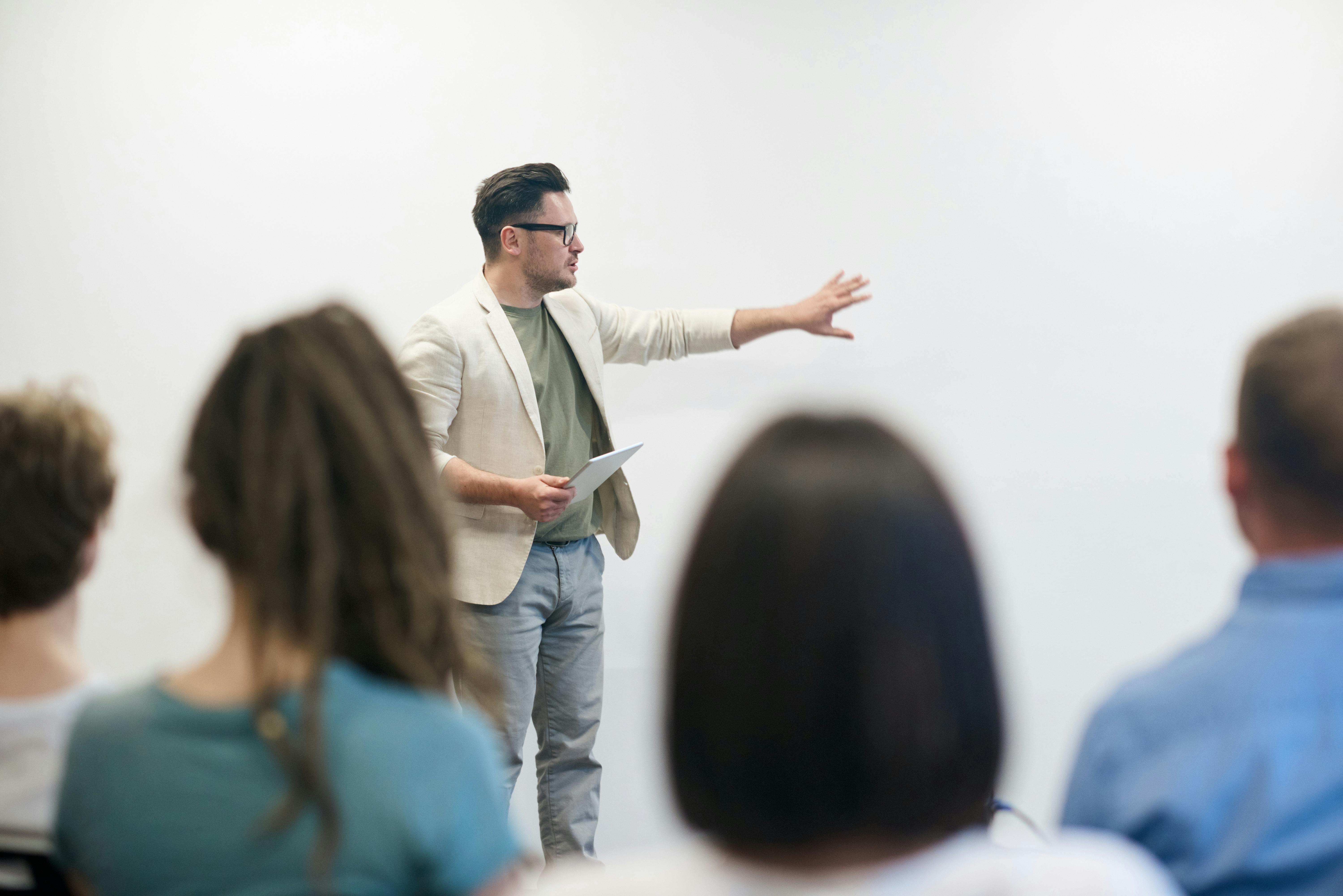
An elite group of professors specialized in the fields of education and psychology.

Digital Lectures
The digital repository for interactive lectures and psychological and educational materials.
